


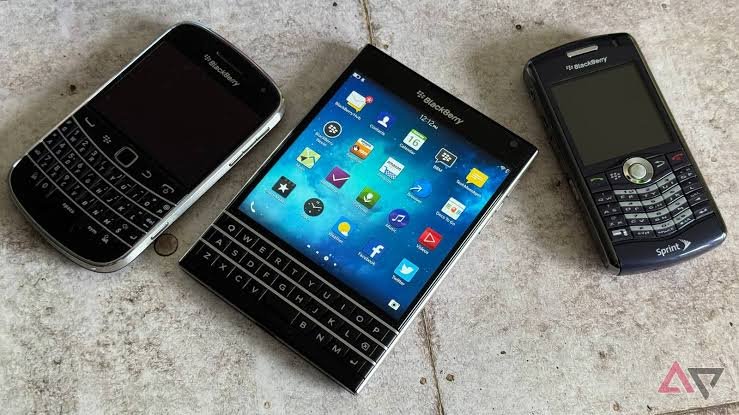
Most people haven’t seen a BlackBerry phone in years. It’s a natural assumption — no phones in stores, no ads on TV, no buzz in tech news. The company must be gone, right?
Not quite. BlackBerry Limited is still operating, still reporting profits, and still raising its revenue forecasts. The company just looks nothing like what most people remember.
This article breaks down what BlackBerry actually does today, what its financials show, and whether there’s any real evidence of a business heading toward closure. Spoiler: there isn’t.
BlackBerry No Longer Makes Phones — But the Company Still Exists
This is where most of the confusion starts. BlackBerry exited smartphone manufacturing years ago. When people stopped seeing those iconic keyboards in stores, many assumed the whole company had shut down.
But those are two different things. The phone business failed. The corporation didn’t.
BlackBerry Limited (ticker: BB) now operates as a B2B software and services company. It doesn’t sell to consumers. It sells to enterprises, automakers, and government clients.
Think of it like a clothing brand that closes all its retail stores but keeps operating as a licensing and design firm. The product you used to see on shelves disappears, but the business continues in a different form. That’s essentially what happened here.
The hardware brand collapsed. The corporate entity pivoted. These are two different outcomes, and mixing them up leads to the wrong conclusion.
What BlackBerry Actually Sells Today
BlackBerry’s current business runs on two main segments: Cybersecurity and IoT (QNX).
Cybersecurity
The cybersecurity side covers endpoint security, unified endpoint management (UEM), and secure communications. These are sold primarily to enterprises and government clients — not individuals browsing an app store.
BlackBerry targets regulated industries where security and reliability matter more than brand recognition. Think federal agencies, financial institutions, and healthcare systems. These clients care about compliance and data protection, not consumer trends.
It’s a competitive space. CrowdStrike, Microsoft, and others have far more visibility. But BlackBerry has carved out a niche in sectors where trust and proven track records carry serious weight.
QNX — The Automotive Software Engine
This is the segment most people have never heard of, and it may be BlackBerry’s most valuable asset.
QNX is a real-time embedded operating system used in automotive digital cockpits, advanced driver-assistance systems (ADAS), and infotainment platforms. It runs in the background of vehicles you’ve probably driven or ridden in.
Here’s what makes QNX interesting from a business model perspective: every car sold with QNX installed generates royalty revenue for BlackBerry. It functions like a long-term software subscription built directly into vehicle production. The automaker designs QNX into the car, and BlackBerry collects royalties on each unit sold — often for years.
The QNX royalty backlog currently sits at approximately $950 million. That’s contracted future revenue from vehicles already designed with QNX inside. It’s not a forecast or a guess. It’s work already built into future production pipelines.
BlackBerry’s Recent Financial Results
If you want to know whether a company is going out of business, look at the numbers. Here’s what BlackBerry’s recent filings actually show.
Full fiscal year 2026: Revenue came in at $549.1 million, up from $534.9 million in FY 2025. That’s a return to top-line growth after a difficult stretch.
Net income for FY 2026: BlackBerry reported a $53.2 million profit. The prior year, the company posted a $79 million net loss. That’s a meaningful swing in the right direction.
Q4 FY 2026: Revenue grew 10% year-over-year. Operating cash flow hit $45.6 million — positive and healthy. It was also the eighth consecutive quarter of improvement in GAAP net income.
Q3 FY 2026: Revenue of $141.8 million exceeded the company’s own guidance by $12.2 million. Operating cash flow was $17.9 million.
None of BlackBerry’s recent filings include going-concern warnings. There are no signs of a company winding down operations or struggling to stay solvent. What the data shows is an operating, cash-generating business that has returned to profitability.
That doesn’t mean everything is perfect — more on the risks shortly — but “going out of business” doesn’t match the financial picture.
QNX Growth and Why It Matters for BlackBerry’s Future
Of the two segments, QNX is generating the most momentum right now. In Q4 FY 2026, QNX posted record quarterly revenue of $78.7 million, up 20% year-over-year. For the full fiscal year, QNX grew 14%.
Management noted that QNX meets the “Rule of 40” — a standard benchmark used to evaluate software business health. The Rule of 40 combines a company’s growth rate and profit margin; a combined score above 40 signals the business economics are working. QNX hit that benchmark for both the quarter and the full year.
The $950 million royalty backlog is the key number to understand here. Automotive software has long design cycles. Once QNX is embedded into a vehicle platform, it’s there for the life of that model. Automakers don’t swap out core operating systems mid-production. That creates durable, predictable revenue that extends years into the future.
This is not a speculative story. The backlog represents real contracts tied to real vehicles already in development.
Forward Guidance and What Management Is Saying
BlackBerry’s management team has publicly stated that the company’s turnaround is complete. That’s their framing — and the numbers support the narrative, at least so far.
For fiscal year 2027, BlackBerry issued revenue guidance of $594–$621 million, which would represent roughly 8–13% growth over FY 2026. The company also projects adjusted EBITDA of $110–$130 million and non-GAAP earnings per share of $0.15–$0.19.
After posting stronger-than-expected results, BlackBerry raised its forecasts — and the market responded. Shares jumped nearly 20% following the announcement of improved results and raised annual targets. That’s not the reaction investors have to a company they expect to fail.
Cybersecurity demand also played a role in the upgraded outlook. BlackBerry raised the lower end of its annual revenue forecast specifically because cybersecurity demand came in stronger than anticipated.
Why People Still Think BlackBerry Is Dying
Brand perception almost always lags behind business reality. BlackBerry’s consumer collapse in the 2010s was public, dramatic, and widely covered. The image of a sinking phone brand stuck in people’s minds — and it hasn’t shifted, even as the underlying company changed direction.
When you stop seeing a product in stores, it’s easy to assume the company behind it is gone. But BlackBerry’s pivot was a corporate strategy, not a close-down. The company deliberately exited low-margin hardware to focus on software and services.
That’s a much harder story to follow than “BlackBerry phones disappeared,” which is why the question keeps coming up.
Real Risks Worth Acknowledging
Saying BlackBerry isn’t going out of business isn’t the same as saying everything is smooth sailing. There are legitimate risks to watch.
- Cybersecurity competition is intense. BlackBerry is much smaller than CrowdStrike, Microsoft, and other dominant players. Holding market share in a fast-moving sector takes consistent execution.
- Automotive cycles are long but also slow to correct. If car production slows, QNX royalties could be affected — not immediately, but over time.
- The turnaround story depends on continued execution. Management says the hard work is done. But forecasts are always uncertain, and one or two weak quarters could shift the narrative quickly.
These are real risks. They’re worth monitoring if you’re an investor or business partner. But none of them point to imminent shutdown. They’re the normal operating risks of a mid-size software company trying to grow in competitive markets.
The Bottom Line
BlackBerry is not going out of business. The phones are gone — that part of the story ended years ago. But BlackBerry Limited is very much an active company, generating revenue, reporting profits, and raising its guidance.
Its two business segments — cybersecurity and QNX automotive software — are both growing. The $950 million royalty backlog gives the business multi-year visibility. The shift from a $79 million net loss to a $53.2 million profit in a single year is not a sign of a company in decline.
For business professionals and investors trying to make sense of this, the key takeaway is simple: separate the brand from the business. The consumer brand faded. The corporation adapted. For more analysis on companies navigating major business model shifts, visit Bloom Business Mag.
BlackBerry’s current situation isn’t a comeback story in the traditional sense. It’s quieter than that. It’s a B2B software company doing the unglamorous work of growing revenue, managing margins, and building out a long-term pipeline in automotive software. That’s not exciting enough
Read Also:
