


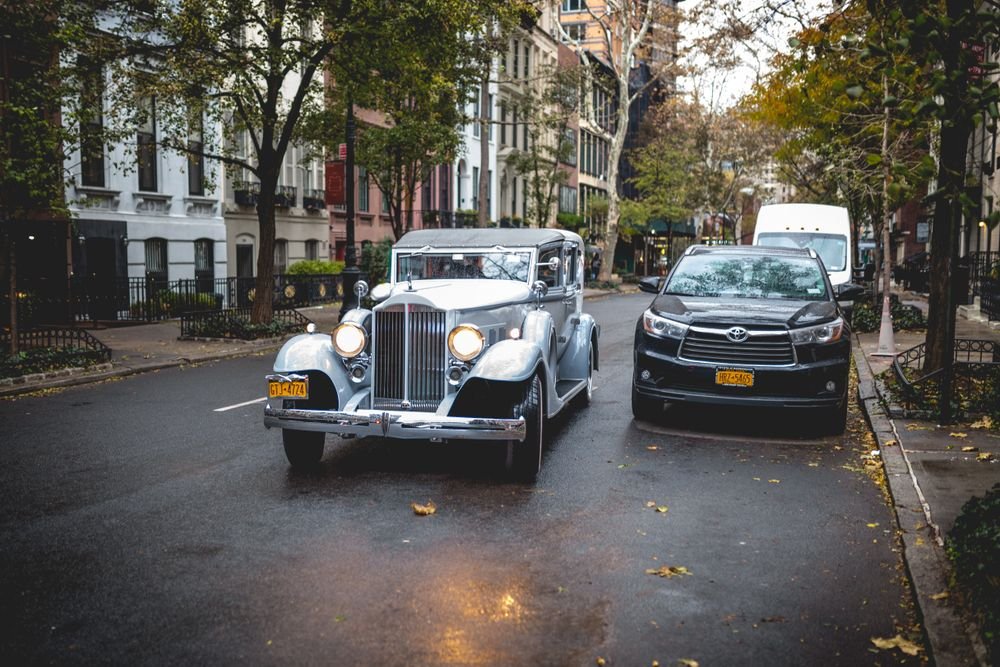
If you’ve been searching “Is Packard going out of business?” — here’s the short answer: Packard already went out of business, more than 60 years ago. The brand stopped producing cars in 1958 and was formally dropped in 1959.
The confusion is understandable. Packard was once one of the most respected names in American automotive history, and its story still generates interest today. This article covers who Packard was, what went wrong, when the brand actually ended, and what the whole story teaches about running a business.
Packard Was One of America’s Most Respected Luxury Automakers
Packard was founded in 1899 in Warren, Ohio, and later headquartered in Detroit. It competed directly with Cadillac and Lincoln at the top of the American luxury market.
This wasn’t just a marketing position. Packard earned its reputation through genuine engineering quality — early V12 engines, careful craftsmanship, and reliable performance that wealthy buyers trusted. Before World War II, owning a Packard meant something. The brand carried real prestige, not just a premium price tag.
During the pre-war era, Packard dominated the upper end of the U.S. auto market. It was the kind of brand that competitors measured themselves against. That makes what happened afterward all the more instructive.
The Strategic Mistakes That Weakened the Brand After World War II
After WWII, Packard faced a difficult choice. Competition was intensifying, and staying purely in the luxury segment meant limited sales volume. So Packard moved down-market.
The introduction of mid-priced models like the One-Twenty gave Packard a broader customer base — but it came at a serious cost. Buyers could no longer clearly tell the difference between a “real” Packard and a cheaper version wearing the same badge. That confusion eroded exactly what made the brand valuable in the first place.
At the same time, Packard kept producing its expensive “Senior” models — the Eight, Super Eight, and Twelve — for the upper end of the market. These were high-quality vehicles, but they were financially draining to build at low volumes. Packard was essentially trying to serve two very different markets at once, without the resources to do either one well.
Think of it this way: if a luxury fashion house started selling budget clothing under the same label, longtime customers would start to wonder what the name actually stands for. That’s the position Packard put itself in — and it weakened the brand at both ends of the market.
Historians are clear that this wasn’t the only reason Packard failed. But the brand dilution problem created a vulnerability that later decisions made much worse.
The Studebaker Merger Made Things Worse, Not Better
In 1954, Packard merged with Studebaker to form Studebaker-Packard Corporation. The logic made sense on paper: combining operations would create scale, reduce costs, and give both companies a better chance against the Big Three automakers.
In practice, it didn’t work out that way. Studebaker came into the merger with weak finances and a cost structure that didn’t mesh well with Packard’s operations. Instead of strengthening both companies, the merger tied Packard to a partner that was itself in serious trouble.
This is a pattern that plays out in business more broadly. Two struggling companies merging rarely produces a strong company. More often, it produces a larger struggling company — one with more complexity and the same underlying problems, now shared between two brands.
The practical consequences showed up quickly. The last Packard built at the historic Detroit plant came off the line on June 25, 1956. After that, Packard-branded vehicles were assembled at Studebaker’s facility in South Bend, Indiana — using Studebaker-based designs with Packard badges. These weren’t Packards in any meaningful engineering sense. They were rebadged Studebakers.
Loyal Packard buyers noticed. Sales kept falling.
The Last Packards Were Built in 1958 — Then the Brand Disappeared
There’s some confusion about exactly when Packard ended, because there are actually several different milestones depending on how you define “last Packard.”
Here’s how the timeline breaks down:
- June 25, 1956: The last Packard built at the original Detroit plant rolls off the line. Most automotive historians consider this the end of “true” Packard production.
- July 16, 1958: The last Packard passenger car assembled by Studebaker-Packard Corporation is completed at the South Bend facility.
- August 19, 1958: Two Studebaker trucks badged as Packards are shipped to Argentina — technically the final Packard-branded vehicles ever produced.
- 1959: The Packard name is formally phased out and removed from corporate identity entirely.
So when did Packard go out of business? Depending on your definition, somewhere between 1956 and 1959. The clearest answer is that by 1959, there was no Packard brand left in any active sense.
The 1958 U.S. recession played a role in the final collapse as well. It hit the auto industry hard, and Packard — already financially fragile — had no buffer to absorb the shock. A business with thin margins and high fixed costs can hold on during good times. When the economy turns, those weaknesses surface fast.
What Remains of Packard Today
Packard as an automaker does not exist. There is no company currently building or selling Packard cars. Anyone asking whether Packard is “about to” go out of business is about 65 years too late.
What does still exist is the legacy. Classic Packards are actively collected and restored. Some former Packard dealerships have been converted into museums that preserve the brand’s history. Automotive history organizations continue to document what Packard built and why it mattered.
If you come across a small garage, club, or museum using the Packard name, those are independent enthusiast operations — not continuations of the original manufacturer. The original company is long gone.
What Packard’s Collapse Still Teaches Us
Packard’s failure wasn’t caused by one bad decision. It was the result of several compounding problems over more than a decade. That’s actually what makes it useful to study.
A few lessons that still apply:
Brand positioning has to be consistent. Packard tried to be both a luxury brand and a mass-market competitor. It ended up being neither. When you stretch a brand too far, customers lose a clear reason to choose it — especially at the premium end.
Mergers between weak companies are high-risk. The Studebaker-Packard merger looked like a solution but turned into a liability. Before merging with any company, understand their real financial position and whether the cost structures are actually compatible. Shared costs only help if the partner isn’t dragging the combined entity down.
Scale matters in manufacturing industries. Packard couldn’t refresh its designs or invest in modern manufacturing at the pace that GM, Ford, and Chrysler could. Over time, that gap became impossible to close. In any capital-intensive industry, falling too far behind on investment tends to be irreversible.
Financial fragility amplifies external shocks. The 1958 recession didn’t create Packard’s problems — it exposed them. A company with strong finances can survive a downturn. A company already stretched thin often can’t. Building financial resilience before hard times arrive isn’t optional.
For more business analysis and practical coverage of company strategy, you can visit Bloom Business Mag.
The Bottom Line
Packard is not going out of business today. It went out of business in the late 1950s after a series of strategic mistakes, a damaging merger, and a recession that left no room for recovery.
What makes Packard’s story worth understanding isn’t just nostalgia. It’s a clear, documented example of how a genuinely respected brand can lose its footing through diluted positioning, poor partnership decisions, and insufficient resources — even when the original product was excellent.
Read Also:
